

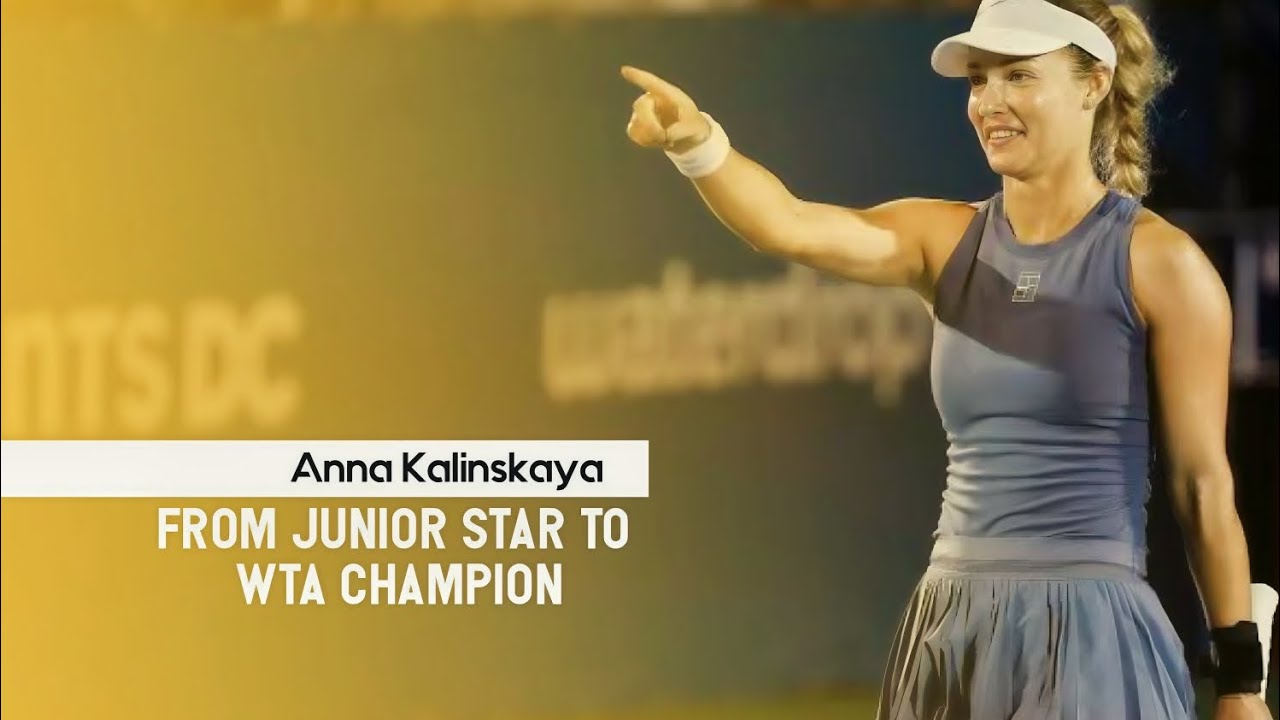
The journey is long and involves many factors. We are going to decode each of the messages Anna wanted to send.
Part 1 - Visible and invisible training
Whilst training plays a central role, it remains the responsibility of coaches to consider training load, intensity, volume and the training programme. In short, it requires expertise in terms of quality and volume. A balance between working hard and working smart to make progress, but above all to avoid injury. Because to perform, you still need to be on the court, moving, playing and hitting the ball.
So how can we respond to the demand made by Anna Kalinskaya – this individualisation of the training process, both physically and technically – while maintaining continuity in the coach-player relationship?
2. "If Alizé Cornet was doing something, I might repeat it, even though she was already a tour player and I was just starting."
3. "That was my first injury. And it still sometimes comes back. I think they overloaded me when I wasn’t ready. I needed a more careful approach."
4. In 10 days I had three different coaches. Priorities were tour players. After that, I didn’t return."
6. "From my first conversation with Patricia, I felt trust. I understood I could talk not only about my backhand but also about how I feel mentally."
Anna Kalinskaya talks about the long journey of rebuilding herself after a serious injury. She discusses the changes she has made to her ‘invisible training’ – that is, the aspects of a player’s routine that aren’t immediately visible: sleep, diet, recovery, treatment and preventive routines. Nothing is left to chance. Everything is measured and quantified, with a balance to be struck between getting to know yourself as an athlete and the overuse of data, which can lead to even more stress.
She also discusses the trust relationship between coach and player. Sometimes, a coach or a player feels it is better not to train in order to maintain mental and physical balance. It is important to find the right balance between pushing your limits and accepting that you need to give yourself a little more time to achieve your goals.
Part 2 - Managing expectations between the junior and senior tour
I didn’t play my last junior year. I went straight into ITF tournaments at 16–17."
- In a tennis player’s career, there are actually several transitions.
The first concerns the transition from the Tennis Europe circuit to the ITF Junior circuit. - The second is between the ITF Junior circuit and the ITF circuit. At what age should one start? How many tournaments a year should one play between the junior and senior circuits? When should they stop playing juniors? It is a matter of managing this critical phase of career development as effectively as possible, whilst being very well supported.
- The third is between the ITF circuit and the WTA. This involves a further adjustment to the process.
There are high expectations surrounding a player. You need to have a perfect understanding of the overall process, know where you stand, and understand the organisation, adaptation and progression required.
I wanted Alo a year earlier. I care about how I look on court. Even if someone pays me, I won’t wear something I don’t like — unless it’s 10 million, maybe!."
The transition from junior to senior level also involves managing the growing relationship with brands. Sometimes this brings disappointments, such as the end of the contract between Adidas and Anna.
A player becomes more than just a player. They are a brand ambassador, or even an ambassador for their own brand. The demands can become greater once success comes along. Often, the agent becomes an increasingly present point of contact. The coach becomes so-called ‘performance tour manager’. This change is significant. Everyone must embrace their new responsibilities and rise to the challenge.
Part 3 - Independance, money, career and family choices
I signed with Octagon and had my Adidas contract, which was paid. I was also part of the national team and got help from the federation."
Tennis is a very expensive sport. Many families are on the search for scholarships and sponsors.
When a player achieves a very high level of performance at a very young age, money is not a problem. This happens very early on. You have to be prepared for it. Player agencies, such as Octogon or IMG, are there to boost off-court earnings. Some players decide to manage this aspect themselves.
Between investment strategies for the player’s own career and planning for the future, the choices faced are similar to those of an businessperson.
There were moments when she was upset. We had periods when we didn’t really talk much. Not zero contact, but the relationship suffered. Setting boundaries helped."
The history of tennis shows there is no one model that is better than another. The role of parents is important, crucial, in fact to a player’s success.
At the age of 18, Anna chose to become independent in order to maintain a very strong relationship with her parents. It is never easy to express yourself, to take responsibility for yourself, or to make your own decisions. These are personal choices that have an impact on sporting and professional success. Above all, Anna shows that family support is important, but that it evolves according to the needs of a young teenager, a young adult and a mature adult.
That’s the cycle of life.
Conclusion
The coach is no longer just a coach. Of course, expertise in training and programme development remains the core of the role. Innovating, measuring, evaluating and adjusting are the very acts of a coach. However, this is not enough to bridge the gap between the junior and senior levels. Their role truly becomes that of a Performance Manager, taking into account a player’s choices, the expectations surrounding them, and their personal goals.
This is what Anna Kalinskaya wanted to share. The message is clear. The JuniorToPro's model is part of this performance model promoted by Anna. With humility, professionalism and ethics.