

Physical Resilience. Mental Strength.
A male player must be able to repeat efforts exceeding 5 hours in duration, over 2 to 3 matches, to have a chance of winning a Grand Slam.
A female player must be able to repeat efforts exceeding 3 hours in duration, over 2 or 3 matches, to have a chance of winning a Grand Slam.
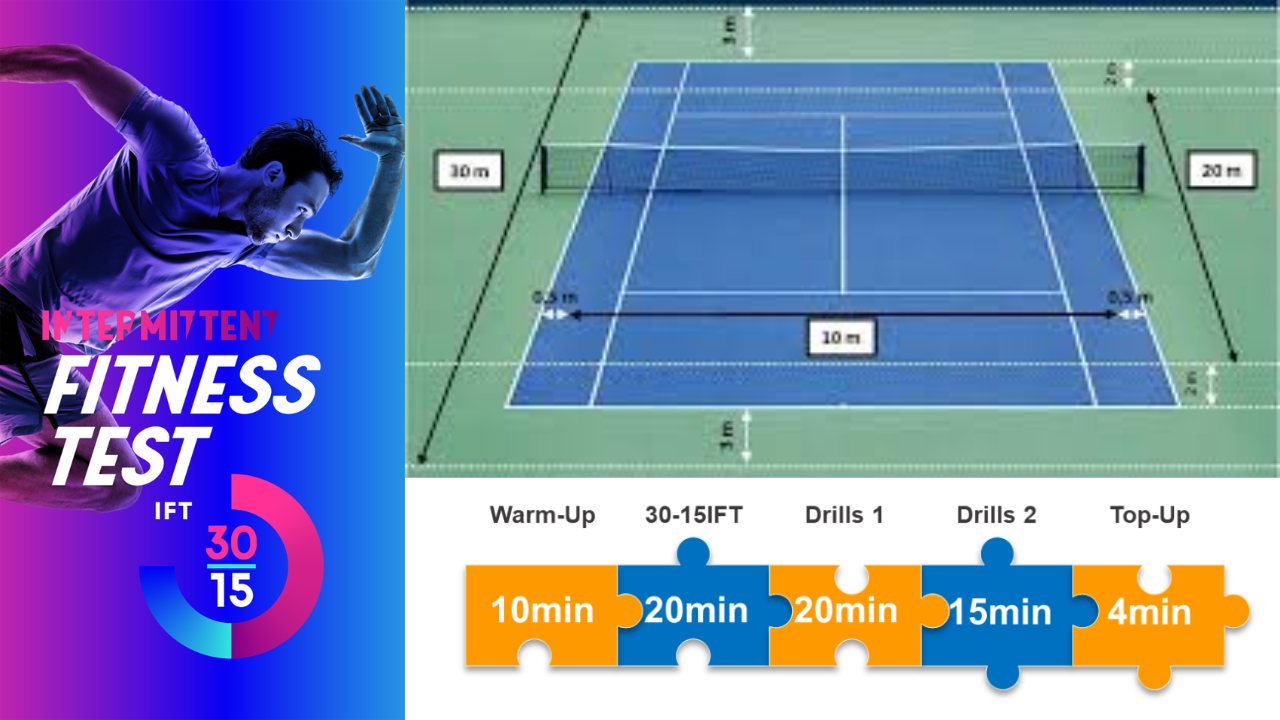
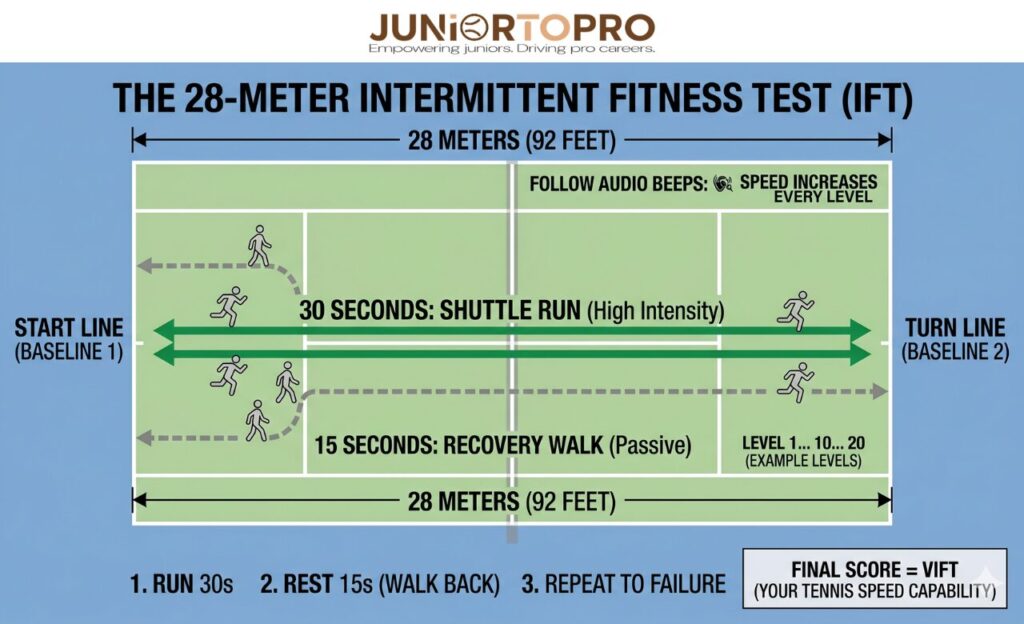
When we talk about effort, we immediately think of the physical aspect. It is true that this is crucial. It is developed step by step, by measuring the right indicators in a player. Tennis is characterised by repeated, intense, sudden movements that can last for several hours. We use the most appropriate and sophisticated test in the world for tennis players: the IFT 30-15 test.
The mental effort is also colossal, particularly as tennis is an individual sport, with little opportunity for coaching during a match. Mental strength is developed on court through the quality of decision-making under pressure, the ability to concentrate, attitude… but also off court with a specialist in this discipline.
What we test ?
- Intermittent Speed
- Aerobic capacity (VO²max)
- Cardiovascular recovery capacity
- Efficiency of change of direction
Geoffroy
Modern tennis does not require you to run a marathon at a constant pace. It demands that you repeat between 300 and 500 high-intensity sprints per match, with only 25 seconds’ rest in between. This is exactly what the 30-15 IFT replicates. If you use Luc Léger’s VMA to do interval training (30/30) on the pitch, your sessions will either be too easy or irrelevant. The VIFT obtained from the 30-15 test is generally 2 to 3 km/h higher than the standard VMA because it takes into account the player’s ability to sprint and recover. It is this speed that enables the fitness coach to design ultra-precise, personalised interval sessions tailored to tennis. To conclude, we will have the following key metrics: ‘tennis endurance’, ‘tennis speed’ and ‘tennis recovery’.
What we train ?
- Decision making under-pressure
- Focus - Reset and Refocus
- Reactivity
geoffroy
Mental training on court is all too often ignored. I incorporate it in various ways, two to three times a week, either before, during or after the session. Below is an example of a warm-up exercise for a player ranked in the ITF Junior Top 500.
The J2PRO Signature: International network
We can provide a mental preparation specialist based on the player’s needs, or work with the player’s current mental preparation coach.
We also provide access to gyms in six different European countries for training, including during tournaments, to make the most of the time available.

