
Home · The 4-in-1 method · Physical & mental training
Pillar 03 · Pro conditioning
Physical & mental training for tennis players
Physical resilience. Mental strength. Built step by step, measured with the right indicators — on court and off court.
Physical · what we test
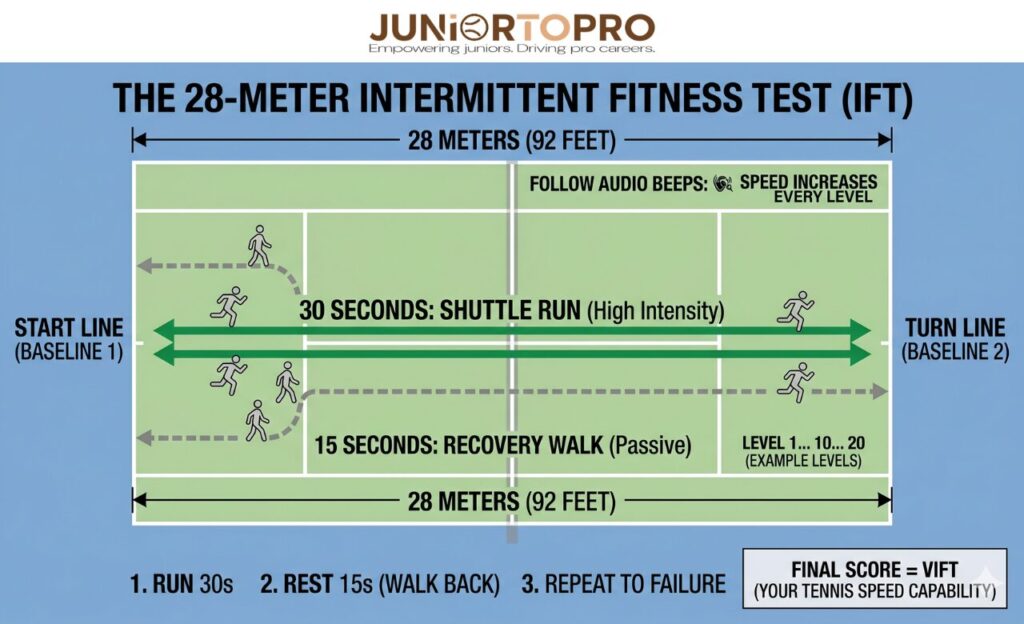
The 30-15 IFT test.
- Intermittent speed
- Aerobic capacity (VO₂max)
- Cardiovascular recovery capacity
- Efficiency of change of direction
Coach’s note — Geoffroy. Modern tennis does not require you to run a marathon at a constant pace. It demands that you repeat between 300 and 500 high-intensity sprints per match, with only 25 seconds’ rest in between. This is exactly what the 30-15 IFT replicates.
If you use Luc Léger’s VMA to do interval training (30/30) on the pitch, your sessions will either be too easy or irrelevant. The VIFT obtained from the 30-15 test is generally 2 to 3 km/h higher than the standard VMA because it takes into account the player’s ability to sprint and recover. It is this speed that enables the fitness coach to design ultra-precise, personalised interval sessions tailored to tennis.
To conclude, we obtain three key metrics: tennis endurance, tennis speed and tennis recovery.
If you use Luc Léger’s VMA to do interval training (30/30) on the pitch, your sessions will either be too easy or irrelevant. The VIFT obtained from the 30-15 test is generally 2 to 3 km/h higher than the standard VMA because it takes into account the player’s ability to sprint and recover. It is this speed that enables the fitness coach to design ultra-precise, personalised interval sessions tailored to tennis.
To conclude, we obtain three key metrics: tennis endurance, tennis speed and tennis recovery.
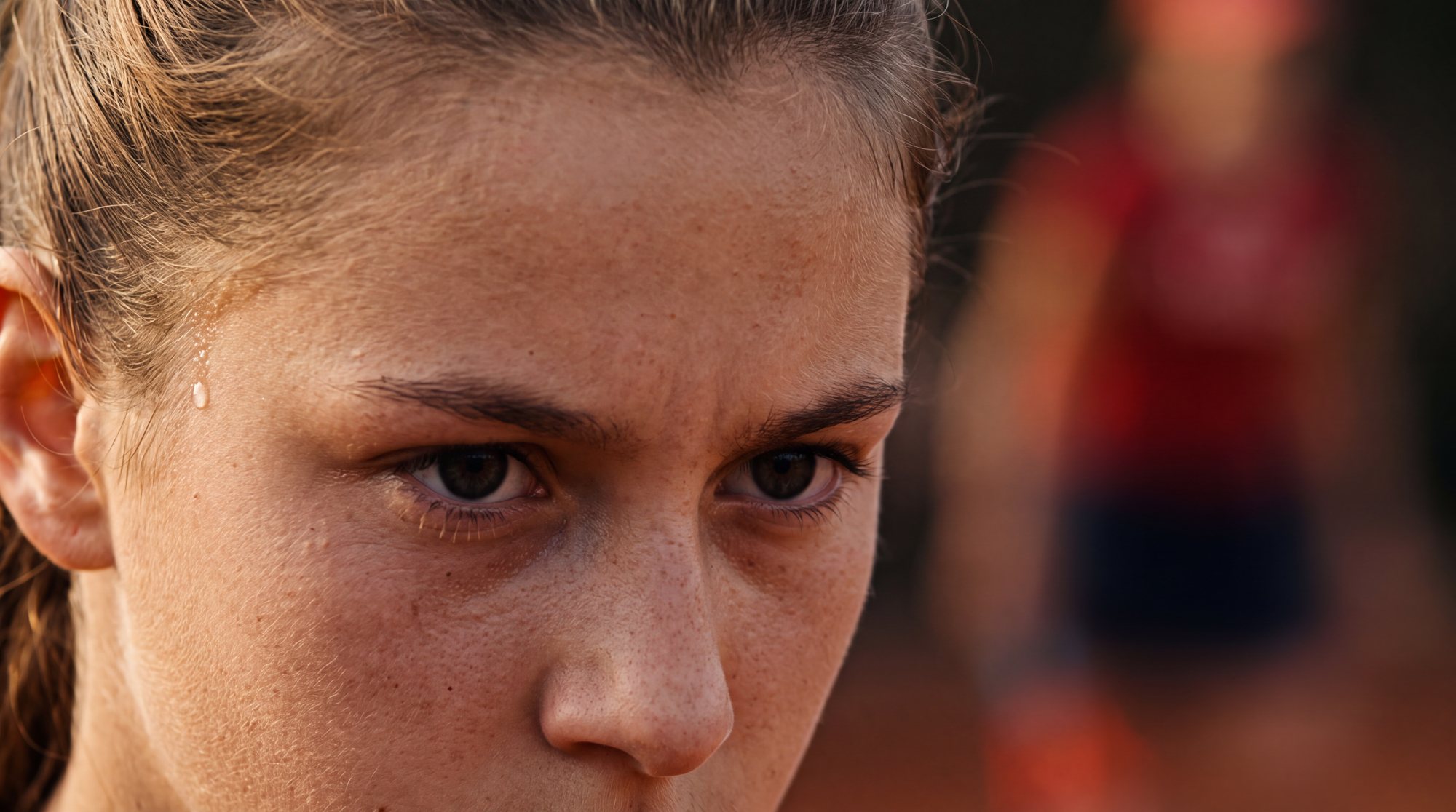
Example of a mental warm-up exercise for a player ranked in the ITF Junior Top 500.
Mental · what we train
Decisions under pressure.
- Decision-making under pressure
- Focus — reset and refocus
- Reactivity
Coach’s note — Geoffroy. Mental training on court is all too often ignored. I incorporate it in various ways, two to three times a week, either before, during or after the session.