
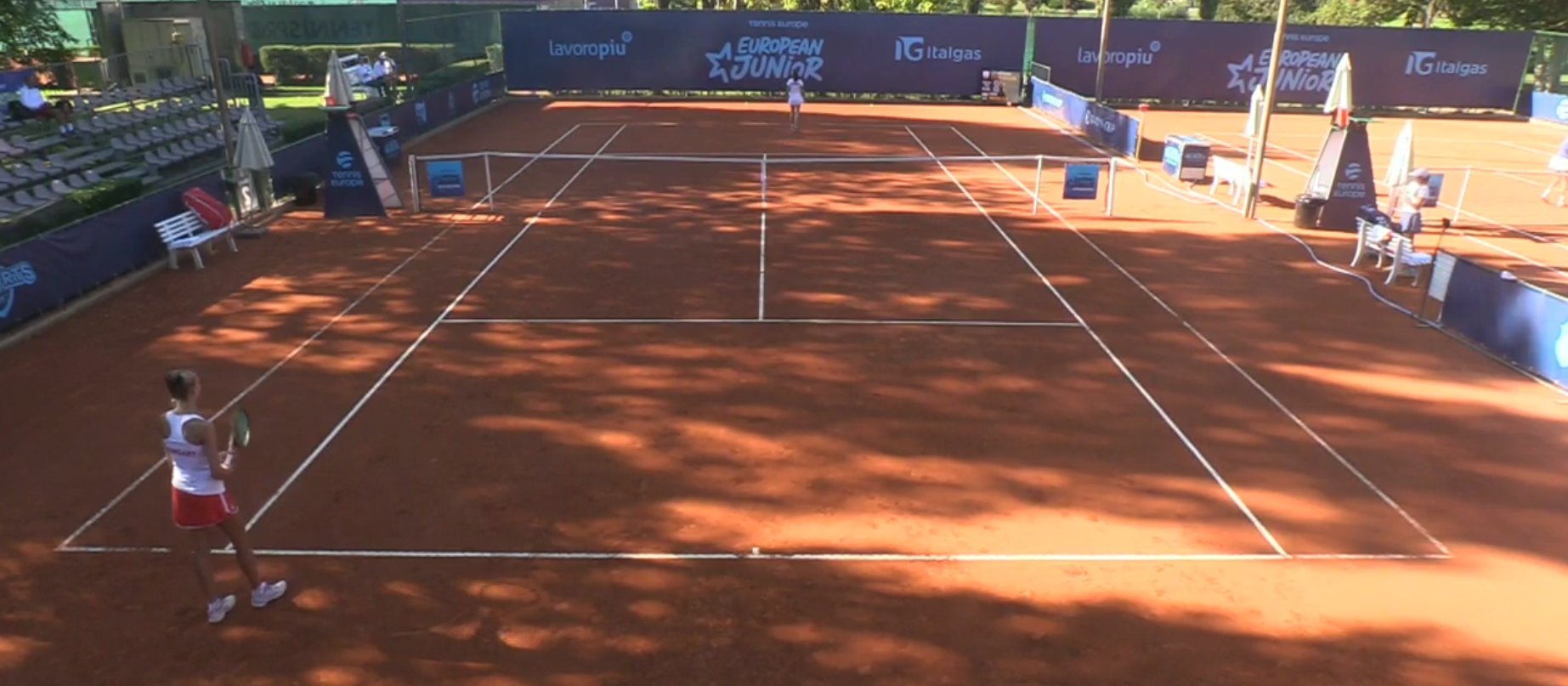
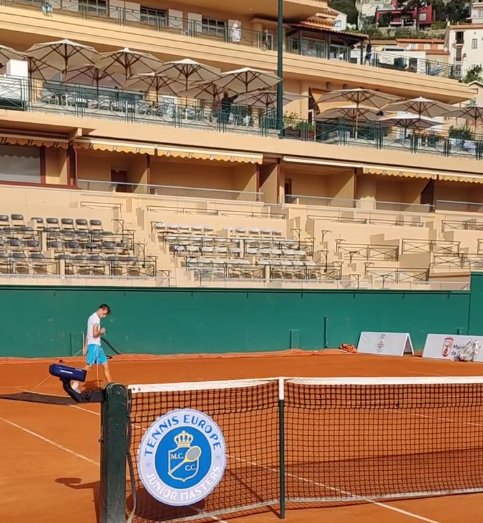
From 21 to 24 October, the Tennis Europe Junior Masters brings Europe’s top 14 & Under and 16 & Under players to the Monte-Carlo Country Club. From 21 to 25 October, the ITF World Tennis Tour Junior Finals gather eight boys and eight girls in Chengdu, China. Two season finales in the same week, and the same question every season: are the best juniors of their age really there? Often, no. And that says more about our ranking and seeding systems than about the players who qualified.
I am Geoffroy Dupuis, founder of JuniorToPro and an independent high-performance and travelling tennis coach based in Montpellier, in the South of France. I work with players on the Tennis Europe Junior Tour, the ITF Junior circuit, the ITF World Tennis Tour and the WTA. Let me say one thing clearly before any analysis: every player in Monte-Carlo and in Chengdu has earned that place on court, match after match, often with huge sacrifices of travel, time and money from their families. This article does not question their merit. It questions the system around them.
Two season finales, two different pathways
The two events look similar: eight players per draw, round-robin groups, a prestigious venue. But they do not measure the same thing.
- The Tennis Europe Junior Masters qualifies the top eight boys and girls of the Race to Monte-Carlo, a season race based on points won on the Tennis Europe Junior Tour. Players are split into two groups of four, and the final day decides the titles.
- The ITF World Tennis Tour Junior Finals qualify players aged 18 and under from the points they earned on the World Tennis Tour Juniors over the past twelve months. The winners can earn up to 1,000 ranking points, as much as a junior Grand Slam, and the event offers more than US$220,000 in travel grants to support the move to professional tennis.
In other words, Monte-Carlo rewards the best season on the Tennis Europe tour, and Chengdu rewards the best season on the ITF Junior tour. Neither event is designed to measure who is the best player of a given age across all circuits. That distinction is the key to everything that follows.
The official line-ups
Tennis Europe Junior Masters, Monte-Carlo (21–24 October)
| Race | Boys 14 & Under | Girls 14 & Under |
|---|---|---|
| 1 | Richard Mitchell (SUI) | Eva Maria Bulai (ROU) |
| 2 | Liam Sharkey (GBR) | Mariia Kocherzhenko (UKR) |
| 3 | Martin Adamca (SVK) | Olivia Serena Conticello (ITA) |
| 4 | Rafael Papoian | Beata Maresova (CZE) |
| 5 | Oskar Laskowski (GBR) | Kristyna Nikodymova (CZE) |
| 6 | Luis Bernardo Saraiva (POR) | Nicole Kurylova (CZE) |
| 7 | Anastasis Mosaikos (CYP) | Alexandra Janoskova (SVK) |
| 8 | Bruno Dzhenev (BUL) | Lilly Falkenberg (SUI) |
| Race | Boys 16 & Under | Girls 16 & Under |
|---|---|---|
| 1 | Igor Peric (SRB) | Lydia Panagiotidou (GRE), joint #1 |
| 2 | Mark Jony (HUN) | Zana Peric (SRB), joint #1 |
| 3 | Luka Kostic (SRB) | Raya Markova (BUL) |
| 4 | Blazej Krzysko (POL) | Ana Chachkhunashvili (GEO) |
| 5 | Nicholai H. Petersen (DEN) | Leonie Schauer (AUT) |
| 6 | Vladyslav Bohomolkin (UKR) | Madalena Fernandes (POR) |
| 7 | Arno Avetisyan (ARM) | Danai Margariti (CYP) |
| 8 | Dmitrii Artemev | Christine Graf (MON) |
Some of these stories deserve a headline of their own. Zana Peric won five singles titles this season, more than any other girls’ 16 & Under qualifier, and her elder brother Igor also finished first in the boys’ race: Tennis Europe notes it is the first time siblings have both done so. Lydia Panagiotidou won the Super Category event at the Foro Italico in Rome. Christine Graf is the first girl from Monaco to qualify directly since the event moved to Monte-Carlo in 2021, and Arno Avetisyan is the first Armenian ever to qualify. Congratulations to all of them.
ITF World Tennis Tour Junior Finals, Chengdu (21–25 October)
| Boys | Girls |
|---|---|
| Jaime Mackenzie (GER) | Sun Xinran (CHN) |
| Thilo Behrmann (AUT) | Anna Pushkareva |
| Keaton Hance (USA) | Jana Kovackova (CZE) |
| Jordan Lee (USA) | Ksenia Efremova (FRA) |
| Ziga Sesko (SLO) | Janae Preston (USA) |
| Dimitar Kisimov (BUL) | Mariia Makarova |
| Vincent Reisach (GER) | Anastasija Cvetkovic (SRB) |
| Yannik Alvarez (PUR) | Polina Skliar (UKR) |
| Alternate: Mathys Domenc (FRA) | Alternate: Zhang Ruien (CHN) |
Names and nationalities are reproduced exactly as published by Tennis Europe and the ITF.
The 16 & Under paradox: European champions who are not in Monte-Carlo
At 14 & Under, the system works well. The best European players of that age still play the Tennis Europe tour, so the Race and the real hierarchy are close. Some of them have started their ITF Junior transition, but the Tennis Europe ranking remains the right reference.
At 16 & Under, the picture changes. Look at the European 16 & Under Championships played in Parma in September, the 50th edition of the event:
- The girls’ final was an all-German final between Milena Steinkamp and Victoria Brand. Steinkamp won, becoming the first German girls’ champion since Andrea Glass in 1992. Tennis Europe itself noted that both arrived in Parma unseeded.
- Victoria Brand already holds a WTA ranking (around 910th in late September), and Milena Steinkamp is already playing professional ITF events.
- In the boys’ event, Stan Put (NED), runner-up the year before, beat István Damján Mokán (HUN) 6-2 7-6(4) in the final.
None of these four finalists is in the Monte-Carlo line-up. This is not a scandal. It is simply the logic of a race based on Tennis Europe points: a player who spends a large part of the season on the ITF Junior circuit or in professional events collects fewer Tennis Europe points, even if she can beat the field on any given week, as Parma proved.
The same logic shows up in Chengdu. Jana Kovackova and Polina Skliar, both born in 2010 and therefore still of 16 & Under age, are among the eight girls qualified for the ITF Junior Finals. They have already moved up a level. And the European 18 & Under champion, Thilo Behrmann (AUT), who beat his compatriot Florian Zimmer in the final in Oberpullendorf, is also qualified in Chengdu. At 18 & Under, the girls’ European title went to Lana Virc (SRB) against Kali Supova (SVK).
Chengdu: the players who are not there because they are ahead
At the ITF Junior Finals, the “missing” players are of a different kind. Many of the best players born in 2008 or later no longer play junior events regularly, because they are already competing on the professional tour. Using the WTA and ATP rankings of 28 September 2026:
| Player (born 2008 or later) | Pro ranking, 28 Sept 2026 |
|---|---|
| Lilli Tagger (AUT) | WTA 61 |
| Laura Samson (CZE) | WTA 113 |
| Kristina Liutova (born 2010) | WTA 119 |
| Emerson Jones (AUS) | WTA 134 |
| Tyra Caterina Grant (ITA) | WTA 156 |
| Mia Pohankova (SVK) | WTA 193 |
| Diego Dedura Palomero (GER) | ATP 186 |
| Moïse Kouamé (FRA) | ATP 194 |
| Cruz Hewitt (AUS) | ATP 322 |
For comparison, the qualified girls in Chengdu who hold a WTA ranking sit roughly between 450th and 1,300th, and the two highest-ranked qualified boys on the ATP list, Ziga Sesko and Keaton Hance, are around 700th and 790th. Once again, this is not a criticism of the qualifiers. Winning the points to reach Chengdu is a remarkable season. It simply shows that the junior finals reward the best junior season, while the most advanced players of the generation are already learning their trade on the ITF World Tennis Tour and the WTA or ATP.
The real question: which ranking should decide seeding?
Season races are fine for season finales: they reward consistency and commitment on a given tour. The problem appears when a ranking that no longer reflects the level of the best players is used to seed major championships, as Parma showed with two unseeded finalists in the girls’ 16 & Under event.
From 16 & Under onwards, my proposal is a simple hierarchy, from the highest circuit to the lowest:
- WTA or ATP ranking, if the player has one.
- ITF World Tennis Tour (professional) results, for players active at W15 to W100 or M15 to M25 level.
- ITF World Tennis Junior Ranking.
- Tennis Europe ranking, combined with the World Tennis Number (WTN) to compare players who have not yet played many international events.
At 14 & Under, the Tennis Europe ranking should stay the reference: it is the circuit where the best players of that age actually compete. After that, seeding should follow the level a player has proved on the highest circuit she plays, not the circuit she has left. That would protect the draws, give the real favourites a fair path, and send a better message to families: moving up a level should never be a disadvantage.
What families and coaches should take from this
- A missing name on a list is not a sign of weakness. At 15 or 16, the best players are often absent because they have already chosen a transition plan towards ITF Junior and professional events.
- A qualification is a real achievement. Eight places per draw, earned over a full season: it deserves respect, whatever happens next.
- Choose your circuit with a plan, not with a race in mind. Chasing Tennis Europe points at 16 can make sense for some players and slow down others. The decision depends on level, budget and long-term goals. I explain how I build that plan in my guide to the junior-to-pro transition and in how to treat a tournament schedule as an investment.
- Read rankings with context. A Tennis Europe position, an ITF Junior ranking and a WTA ranking measure different things. You need all three, and the calendar behind them, to evaluate a player properly.
Frequently asked questions
How do players qualify for the Tennis Europe Junior Masters?
The top eight boys and girls of the season’s Race to Monte-Carlo in each age group (14 & Under and 16 & Under) qualify. The race is based on points earned on the Tennis Europe Junior Tour during the season.
How do players qualify for the ITF World Tennis Tour Junior Finals?
The eight best boys and girls aged 18 and under, based on ranking points earned on the World Tennis Tour Juniors over the previous twelve months, qualify for the Finals in Chengdu.
Why are some top juniors missing from these events?
Because they spend most of their season on a higher circuit. A 16-year-old playing ITF Junior and professional events earns fewer Tennis Europe points, and an 18-year-old already ranked on the WTA or ATP rarely plays enough junior events to qualify for the Junior Finals.
Good luck to all the qualifiers
I will follow both events closely and come back next week with an analysis of the results. To every player in Monte-Carlo and Chengdu, and to the families and coaches who made it possible: well done, and enjoy it. You earned it.
If you are a parent, a player or an agent and want a clear plan for your next season, between Tennis Europe, ITF Junior and professional events, you can book a call with me.
Sources
- Tennis Europe, “Tennis Europe Junior Masters: Line-Up Revealed!”, 7 October 2026.
- ITF, “Who has qualified for the 2026 World Tennis Tour Junior Finals?”, 7 October 2026.
- Tennis Europe, “European 16 & Under Championships… as it happened!”, September 2026.
- Tennis Europe, “European 18 & Under Championships… as it happened!”, September 2026.
- WTA and ATP rankings of 28 September 2026, compiled by Tennis Abstract. Rankings change every week.